

Table of Contents
There's this fantasy floating around writing Twitter that AI will either destroy fiction or write your novel for you while you nap. Both are wrong. The truth? Writing with AI is a skill—one that separates writers who finish manuscripts from those who stare at blinking cursors for months.
You've been there. Chapter twelve. Your protagonist needs to get from the burning warehouse to the confrontation with her estranged father, and you've typed the same paragraph six times. Not because you don't know what happens next, but because the words won't come. The scene exists perfectly in your head, vivid, emotional, essential, but your fingers have staged a revolt.
This guide breaks down exactly how to use AI as a fiction writing partner: what it actually does, how to wield it without losing your voice, and why so many professional novelists now use these tools. No hype. No fear-mongering. Just practical craft advice for writers who want to finish their books.
By the end, you'll understand how AI writing tools work, which approaches actually help fiction writers, and how to start using them today, even if the closest you've come to AI is yelling at Siri.
Table of Contents
- What is Writing with AI?
- Why AI Writing Matters for Fiction Writers
- How AI Writing Actually Works
- Getting Started: Step-by-Step
- Best Practices for AI-Assisted Fiction
- Common Mistakes to Avoid
- Tools and Resources
- How Sudowrite Makes AI Writing Easier
- FAQ
- Key Takeaways
Quick Summary (TL.DR): Writing with AI means using language models as creative partners for drafting, brainstorming, and revision, not as replacements for your imagination. The key is learning to prompt effectively, maintain your voice, and use AI for the tedious parts so you can focus on what matters: the story only you can tell.
What is Writing with AI?
Writing with AI means using artificial intelligence tools, specifically large language models, as collaborative partners in your fiction writing process. Think of it less like hiring a ghostwriter and more like having an infinitely patient writing buddy who's read everything and never sleeps.
These tools generate text based on your input. The better your input (prompts, tone instructions, story details), the better the output. The key is control: using AI to get unstuck, rewrite flat scenes, or explore dialogue options, not to replace your creativity.
Why AI Writing Matters for Fiction Writers
Modern fiction writing isn't just about inspiration, it's about iteration. You refine scenes, explore character motivations, and rework dialogue until it sings. AI helps accelerate that process.
Writers use AI to:
- Brainstorm plot twists
- Flesh out side characters
- Rewrite flat descriptions
- Generate sensory detail
- Edit clunky prose
Far from being a crutch, AI becomes a flashlight in the fog.
How AI Writing Actually Works
Language models are trained on patterns of text and can generate new sentences that fit your prompts. The secret isn't the model, it's your input. The better your direction, the better the results.
Example: Instead of typing "Describe a forest," try:
"Write a tense, moonlit forest scene in the style of a thriller, focusing on sound and motion."
The second prompt shapes style, pacing, and tone, all writerly choices under your control.
Getting Started: Step-by-Step
- Pick a writing tool designed for storytellers (such as Sudowrite).
- Start with a scene you're stuck on.
- Give the AI clear direction: what’s happening, who’s involved, and what tone you need.
- Generate outputs and edit ruthlessly. Mix the best lines with your own.
- Repeat as needed, but always keep authorship in your hands.
Best Practices for AI-Assisted Fiction
- Always rewrite. Never copy text directly. You’re an author, not an editor.
- Train the tool on your tone. Include examples of your prose when you prompt.
- Iterate quickly. Use AI to explore multiple versions of a scene.
- Stay human. Let emotion, pacing, and theme drive your choices.
Common Mistakes to Avoid
- Expecting AI to finish drafts for you
- Using generic prompts
- Losing your voice to automated suggestions
- Ignoring character consistency
Tools and Resources
- Sudowrite (built for fiction)
- ChatGPT / Claude / Gemini (general-purpose models)
- Novel-specific plugins for outlining
- AI voice readers for proofing prose aloud
How Sudowrite Makes AI Writing Easier
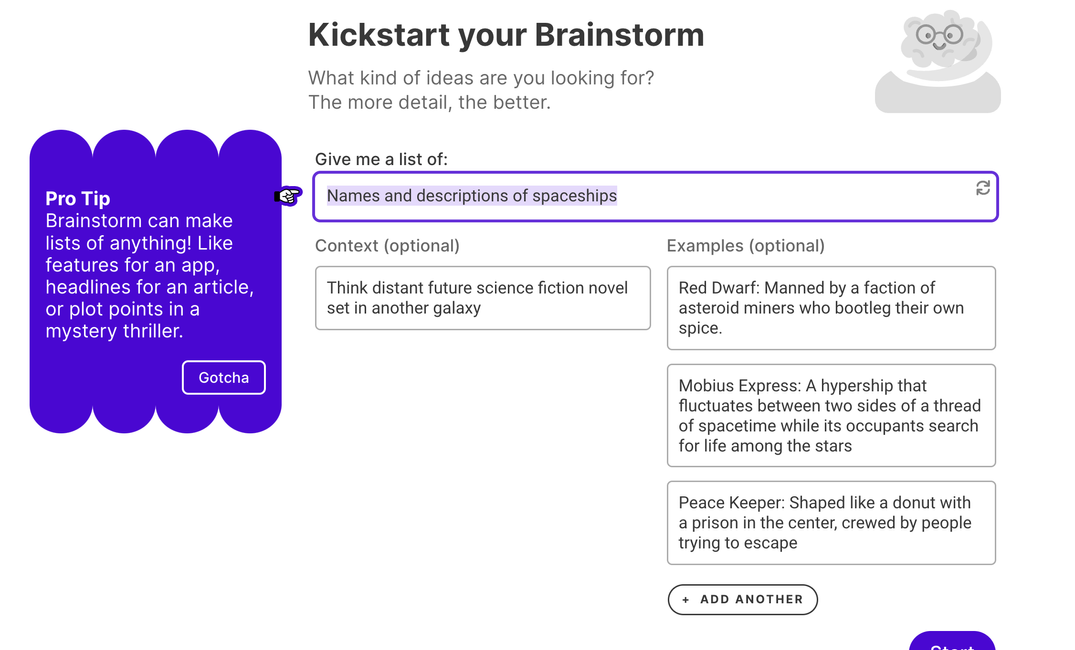
Sudowrite focuses on fiction-first prompting. Tools like ExpandDescribeand Rewrite help you move forward without sacrificing tone. Its built-in training features help maintain your style, ensuring your book still sounds like you.
Start Writing with AI in 10 Minutes
FAQ
Q: Will AI replace fiction writers?
A: No. Stories still need human meaning, nuance, and purpose. AI helps with sentences, not soul.
Q: Is using AI tools considered cheating?
A: Not unless you’re submitting raw AI drafts. Responsible use means acknowledging the tool and editing heavily.
Q: Can AI help me finish my first draft faster?
A: Absolutely. It helps break creative inertia and keeps momentum going.
Key Takeaways
- Writing with AI is a creative collaboration, not automation.
- Use AI for exploration, not replacement.
- Prompt clearly and edit decisively.
- Keep your author's voice central to every scene.