

Table of Contents
The psychological thriller lives or dies on one question: when does the reader stop trusting the narrator? Get the timing wrong and you either tip your hand in chapter three or strain credulity by the climax. Most AI writing tools sabotage this genre because they default to clarity, sand down ambiguity, and refuse the queasy moral territory that thrillers require.
Sudowrite is built for fiction, and its thriller toolkit is specifically tuned for the kind of doubled, hedging, deeply uncomfortable prose that makes books like Gone Girl and The Silent Patient work. This guide walks through how to build an unreliable narrator, layer mounting dread, and keep the reader uncertain without losing them.
Why Most AI Botches Psychological Thrillers
General-purpose AI writes toward clarity. It explains motivations. It resolves contradictions. It softens dark material with hedges and disclaimers. None of that works for thrillers.
A psychological thriller protagonist needs to lie. Sometimes to the reader. Sometimes to themselves. The prose has to telegraph wrongness without naming it. Page one of The Silent Patient establishes Alicia as a problem, but Theo, the narrator, sounds reasonable, professional, almost dull. The dread builds because the surface is so flat. AI that "helps" by adding emotional clarity destroys that effect.
You also need a model that won't flinch. Thrillers traffic in obsession, violence, sexual coercion, grief that curdles into rage. A tool that pumps the brakes every time things get dark is a tool you'll fight for every paragraph.
Muse: The Default Model for Thriller Prose
Per Sudowrite's CX prose-modes matrix, Muse is the recommended model for thrillers, alongside romance, horror, and erotica. It's the in-house, fiction-trained model that doesn't refuse explicit or dark content and writes with novelist instincts rather than essay-writer instincts.
Three reasons Muse fits psychological thrillers specifically:
- It holds voice across long stretches. Unreliable narration depends on a consistent, slightly-off interior monologue. Muse maintains tone through five hundred words of close-third without slipping into omniscient explanation.
- It won't sanitize. When your narrator is calmly describing how they followed someone home, Muse delivers the prose without adding moral hedging or sudden remorse the character wouldn't feel.
- It does menace at low volume. Thrillers need quiet wrongness more than loud horror. Muse can write a kitchen scene where nothing happens and the reader's skin still crawls.
Set Muse as your default for the manuscript. Switch to Claude 3.7 Sonnet (per the CX matrix) only if you're writing a thriller that leans into puzzle-box plotting and want extra logical rigor on the procedural beats.
Building the Unreliable Narrator in Characters
The Story Bible's Characters cards are where you architect the lie. A reliable narrator card lists who someone is. An unreliable narrator card lists who they think they are versus who they actually are, and where those two diverge.
Open your protagonist's card and split the voice and personality fields into stated and hidden columns. Here's a working example for a fictional narrator named Hannah Pryce, a forty-two-year-old defense attorney whose teenage daughter has gone missing:
Stated personality (what Hannah believes): Composed under pressure. Rational. A good mother who did everything right. Trusts the system but knows its limits. Her marriage is fine. She loved her daughter unconditionally.
Hidden personality (what's actually true): Has been emotionally absent for two years. Resented her daughter's adolescence. Made one specific phone call on the night Mira disappeared and has not told the detective about it. Her marriage ended in everything but paperwork eighteen months ago. She is rehearsing grief because she is afraid she does not feel it correctly.
Voice notes: Lawyerly precision. Hedges with qualifiers ("more or less," "roughly," "I think"). Avoids strong adjectives. Describes other people's emotions in clinical detail. Describes her own emotions abstractly or not at all. When asked direct questions, restates the question before answering.
That last field is the gold. Muse reads voice notes carefully. Tell it your narrator restates questions before answering and the dialogue will start doing that on its own, which is exactly the kind of structural tell that makes a reader squint and re-read.
Tone Shift: Ominous as Your Working Setting
Tone Shift lets you nudge pacing and mood without rewriting from scratch. The Ominous preset is the one you'll live in for a thriller.
Ominous doesn't mean dark. It means off. The way Ominous reshapes prose tends to:
- Slow the cadence. Shorter sentences. More periods. Fewer subordinate clauses.
- Pull descriptive attention to surfaces and objects rather than emotions. The chipped paint on the doorframe. The way the coffee mug sat exactly in the center of the coaster.
- Strip qualifying adverbs. "Quietly" gets cut. The reader has to infer the quiet.
- Introduce small inconsistencies in the narrator's account. Times that don't quite match. Details that contradict the previous paragraph.
Run a paragraph through Tone Shift Ominous before you commit. You'll often find the AI version reads tighter and stranger than the draft you wrote on Sunday morning over coffee. Take what works. Push back on what feels like a Tone Shift cliché.
Rewrite: More Inner Conflict for the Doubled Mind
The protagonist of a psychological thriller is at war with themselves. The Rewrite tool's More Inner Conflict mode is built for exactly this register.
Select a passage where your narrator is describing an action or decision. Run More Inner Conflict and watch the prose split open. The narrator starts to argue with themselves mid-sentence. Justifications appear, then collapse. The reader sees the gap between what the character does and what they're telling themselves about it.
Before, written flat:
I drove past the school three times before going home. I needed to be sure she wasn't there, hiding, embarrassed about whatever fight we'd had. That was all.
After Rewrite > More Inner Conflict:
I drove past the school three times. The first pass was reasonable. A mother checking. The second was thorough. The third I cannot account for, and I noted, even as I made the turn for a fourth, that I had stopped counting. She would not have hidden. Mira did not hide from me. I want to say that and have it be true. I needed to be sure, I told myself, but what I was being sure of had begun to drift.
The fact stays the same. The narrator's relationship to the fact has cracked open. That's the move.
Worldbuilding Cards for Mundane Dread
Thrillers don't need elaborate worldbuilding the way fantasy does, but the small, specific details matter enormously. Use Worldbuilding cards for the things readers fixate on: the house, the workplace, the small town with one stoplight, the routine the protagonist has built.
Create cards for:
- Settings: The Pryce family kitchen, with the chipped tile near the dishwasher and the calendar that hasn't been turned to October. The specificity is the dread.
- Rules: Internal logic that the reader will eventually use to catch the narrator in a contradiction. Mira's curfew was 10 p.m. The dog never barks at family. The back door's bolt sticks unless you lift it.
- Items: The phone Hannah keeps replacing the SIM card on. The locked drawer in the husband's office. The painting in the hall that gets mentioned twice and then a third time too late.
When you call Write in Guided mode, these cards feed Muse the texture it needs. The prose comes back grounded in your specifics instead of generic thriller backdrop.
Structural Reference: Gone Girl and The Silent Patient
Two books to keep open while you draft. They're the reference points for almost every contemporary psychological thriller.
Gone Girl uses dual unreliable narration. Nick lies by omission. Amy lies by construction. The structure is two competing accounts the reader is forced to triangulate. If you're building a dual-POV thriller, set up two separate narrator cards in Characters with explicit fields for what each one is hiding from the other and from the reader. Use POV/Tense per chapter to flip cleanly.
The Silent Patient uses a single narrator whose unreliability is structural rather than line-by-line. Theo seems calm, professional, helpful. The lie is bigger than any single sentence. For this kind of book, the Characters card needs a "stated relationship to the case" field that diverges sharply from the "actual relationship" field. The prose itself stays steady. The reader's understanding is what reverses.
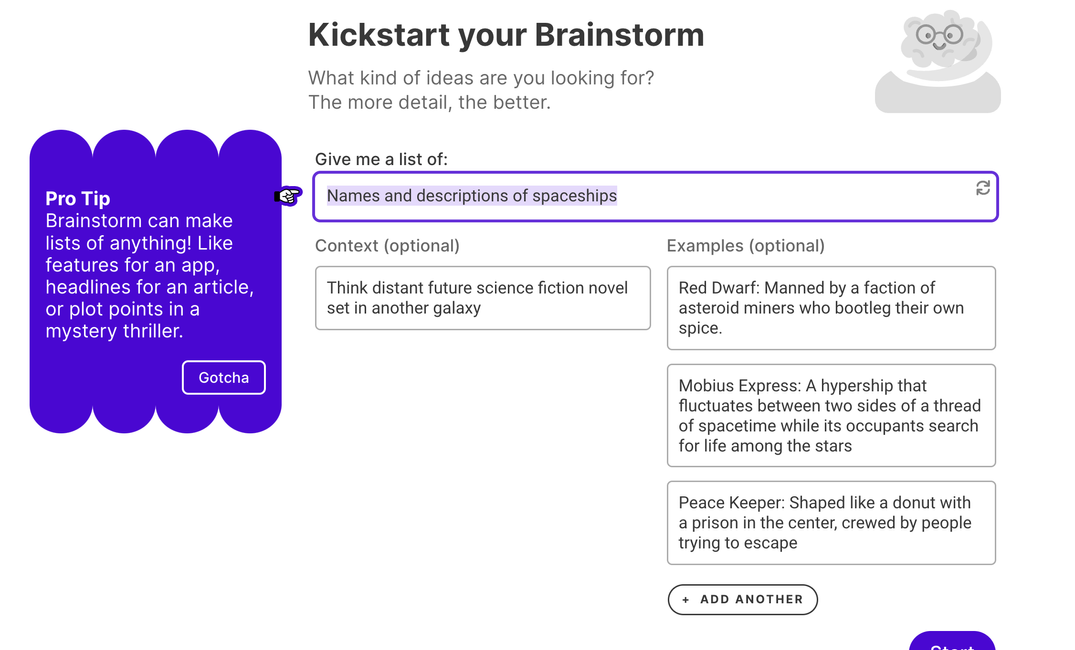
Both books rely heavily on red herrings woven into ordinary domestic detail. Use Brainstorm to generate twenty possible misdirections for your plot, then cull to four or five. Plant them early and let them breathe.
Chapter Continuity for the Long Con
Thrillers depend on the reader being able to flip back and find the clue they missed. That only works if your timeline, your character knowledge, and your details are consistent across forty thousand words.
Chapter Continuity catches the contradictions you won't. Things like the narrator claiming they were home all evening in chapter four when chapter two showed them at a gas station at 9:14. Or a character knowing something they shouldn't know yet. Or a physical detail of the house drifting between chapters.
Run Chapter Continuity after every three chapters. The reports are usually short. The fixes are usually small. The credibility you preserve is enormous, because thriller readers are forensic, and the wrong contradiction can collapse the whole house.
Creativity Dial: Where to Set It
The Creativity Dial goes from 0 (safe) to 10 (chaotic). For most psychological thriller prose, sit between 3 and 5.
- 3 to 4 for interior monologue. You want consistency, not wildness. The narrator's voice has to feel inevitable. Cranking the dial here produces purple prose and disorienting metaphors that read as authorial flourish rather than character interiority.
- 5 to 6 for action and reveal scenes. When the plot pivots, you want some surprise in the language. Not chaos, but something to make the moment land.
- 2 for dialogue. Thrillers thrive on flat, ordinary speech that conceals enormous pressure. Keep the dial low and let what isn't said do the work.
Chat: A Reader Who Reads Like a Reader
Chat reads your Story Bible. That makes it useful for the question every thriller writer needs answered: when does the reader catch on?
You can ask Chat where it started suspecting the narrator. You can paste a chapter and ask which detail felt wrong. You can ask if the misdirection in chapter six is working or already transparent. The answers won't be perfect, but they're grounded in your actual project rather than a generic critique template, and they'll surface the places where your unreliability is showing too soon.
Use Chat early. Most thriller drafts fail at the level of pacing the reveal, and the only way to know is to test the reader experience on something other than yourself.
A Twenty-Minute Walkthrough
Here's a tight workflow for drafting a chapter where your unreliable narrator does something the reader should suspect but not yet understand.
- Open Characters and re-read the hidden personality field. Three minutes. Get back inside the lie.
- Write the scene flat first. Two hundred words in your own voice. What physically happens. No interiority. Use Write > Guided with Muse to extend if you stall.
- Run Rewrite > More Inner Conflict on the interior moments. Don't run it on the action beats. Let the action stay clean.
- Apply Tone Shift > Ominous to the descriptive paragraphs. Pick one or two surface details to defamiliarize.
- Read aloud. If a sentence sounds like it explains the character to the reader, cut it. Thrillers don't explain. They reveal.
- Save a snapshot before any major rewrite. You'll want to compare versions in week two when you've forgotten which choice you made.
This loop produces a draft that's specific, voice-consistent, and quietly wrong in the right way. You can do a full scene in twenty to thirty minutes and have something usable instead of a placeholder.
What to Watch Out For
Two failure modes show up in AI-assisted thriller drafts.
The first is over-foreshadowing. Models trained on a lot of fiction know that thrillers have reveals, and they sometimes drop hints with a heavy hand. Cut anything that reads as a wink. Pull Tone Shift back. Lower the Creativity Dial. Trust the structure.
The second is the narrator getting too self-aware too fast. More Inner Conflict is a powerful tool, and if you run it on every paragraph the narrator starts sounding like they already know they're lying. Reserve it for two or three pivot points per chapter. Most of your prose should leave the gap unsaid.
A psychological thriller works because the reader is doing more cognitive work than the narrator is admitting to. Your job is to leave room for that work. Sudowrite gives you the controls to do it. The discipline is yours.
If you're starting a thriller and want to see how Muse holds an unreliable voice across a real chapter, you can try Sudowrite free and run the workflow above on something you already have in a drawer. The opening pages of an abandoned draft are usually where the doubled voice is waiting.